Sunday, May 9, 2010

Sleepless In Seattle : The Final Chapter

Pacific North Coast: Great Seattle Fire


On June 6, 1889 a fire started that spread for 25 blocks and burned the entirety of Seattle's business district. It was a worker at a cabinet-making shop who accidently started the blaze. While there was only one fatality, the total damage cost about 20 million dollars. That was quite a chunk of change back in the late 1800s. The citizens of Seattle decided to rebuild after the fires, rather than relocate. After the Great Seattle Fire many changes were made in terms of fire safety ordinances and standards.

references:
http://en.wikipedia.org/wiki/Great_Seattle_fire

California: Earthquakes

As this clip from an interesting National Geographic special reveals, Seattle rest upon a fault that will inevitably produce a massive earthquake. It is uncertain when such a destructive natural disaster will occur. But just as one of the scientists confess in this video, living in the beautiful city of Seattle is well worth the possibly of experiencing such a disaster within the next couple of decades.

Saturday, May 8, 2010

The Empty Interior: Battle Of Seattle


On the morning of January 26, 1856, after months of raids and clashes with federal troops in southern King County and in Thurston County, Native Americans attacked Seattle. The battle ultimately ended with two European causalities, and twenty-eight Native deaths. Eurpeoan victory was inevitable, due to their being backed with artillery fire and having Marine support.

The Southwest Border Area: Ethnic Diversity

According to the 1990 and 2000 census surveys, the percentage of white citizens decreased over the 10 year span, but caucasians are still the vast majority of the population. The slight change, though, may have to do with the census beginning to take more than one ethnic background into consideration in the 2000 surveys.


references:
http://seattletimes.nwsource.com/census2000/charts/verticalrail.html

The Great Plains and Prairies: Human/Land Interaction
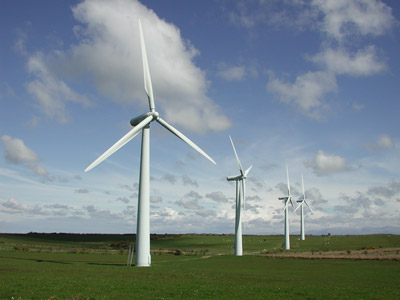

Starting in 2002, in an effort to curtail carbon emissions, Seattle began to receive a portion of its power from Stateline Wind Energy Center. An endeavor which has been labeled the "Stateline Wind Project" generates electricity from wind. The Seattle City Light Energy Management Services now has 175 megawatts of wind generating capacity due to the project, which will produce 54 megawatts per year. In addition to this, a biodiesel program was implemented in 2004. Biodiesel creates less greenhouse gas emission than standard petroleum.


References:
http://www.rnp.org/Projects/stateline.html

Thursday, May 6, 2010

The Agricultural Core- Urban Agriculture in Seattle


On April 29, 2010 legislation was passed in Seattle which removed barriers the previous restricted the growth of urban agriculture. The new regulations are a giant step in the right direction for the urban agriculture movement. The new rules are set to:

expand opportunities for community gardens and urban farms in all zones

• allow rooftop greenhouses dedicated to food production a 15 foot exception to height limits

• add farmers’ markets to the definition of a “multipurpose retail sales” use

• increase the number of domestic fowl allowed on a lot from three to eight

• allow existing urban horse farms greater than ten acres to operate as a permitted use in single-family zones


2010 has been named "The Year of Urban Agriculture" in Seattle. What is ultimately intended to be gained from the new legislation is the promotion of urbanized framing methods and a stronger dependence on locally grown food.


references:
http://www.seattle.gov/urbanagriculture/


The Southern Coastlands- Sustainable Development in Seattle


The city of Seattle is going Green(er). Just recently the city's Planning and Development Division instated a program that intends to include sustainable features for site development projects and all government buildings under five thousand feet. All architectural endeavors strive to receive a minimum silver level rating from the US Green Building Council's LEED rating system. The most recent addition is that of the Carkeek Environmental Learning Center, which snagged the city's first Gold rating.


references:
http://www.cityofseattle.net/parks/sustainable/default.htm

Saturday, March 13, 2010

The Changing South - Seattle Culture


Jimi Hendrix was one of the many musicians who were born and raised in Seattle.


Seattle culture is quite rich and far-reaching, especially when it comes to music and performing arts. One of the most prominent displays of this is the grunge scene that emerged in the mid-eighties. The appearance of local groups such as Nirvana, Soundgarden, Alice in Chains, and Pearl Jam, and the founding of the Seattle-based label Sub-Pop, began the movement that rebelled against the flashy aesthetic of the 80s.


references:
http://en.wikipedia.org/wiki/Seattle

Appalachia and the Ozarks - Seattle's Government

Mayor Mike McGinn


Seattle is a charter city that employs a Mayor-Council former of government. While the city is for the most left-leaning when it comes to politics, all offices are non-partisan. The current mayor of The Emerald City is Mike McGinn. McGinn is the founder and form executive director of the non-profit advocacy group, Seattle Great City Initiative. He staunchly supports legalization and taxation of marijuana believing using it as a cash crop could aid in any financial problems Seattle is experiencing. He is also strongly against the expansion of suburban highways and is strongly in favor of light rail expansion.


references:
http://www.seattle.gov/html/CITIZEN/your.htm
http://en.wikipedia.org/wiki/Government_and_politics_of_Seattle

Bypassed East - Seattle's Economy


Aerospace has long been a huge part of Seattle's economy. Boeing employs over 4500 people in the Seattle region and is a significant part of its economy. The city's largest employer is the University of Washington, however. The university contributes more than 3 billion to the economy on an annual basis. Not only playing a major role financially, the university also contributes to the healthcare, science, information technology, and biotechnology sectors.

While Seattle has felt the effects of the recession, its economy has still remained strong in comparison to most US states. It's still a breeding place for start up companies, especially within the field of green technologies.

Total Employment

Number of full-time and part-time positions (not including resource or construction)

Year

Seattle

King County

Greater Seattle Area*

1980

386,684

697,401

1,033,407

1990

469,802

972,567

1,445,243

2000

536,471

1,188,577

1,748,243

2006

470,698

1,125,197

1,615,507

2020
(projection)

653,514

1,498,043

2,224,597

Source: Puget Sound Regional Council
*King, Snohomish, Pierce and Kitsap Counties


references:
http://www.cityofseattle.net/oir/datasheet/economy.htm
http://www.city-data.com/us-cities/The-West/Seattle-Economy.html
http://en.wikipedia.org/wiki/Seattle

Friday, March 12, 2010

North America's Manufacturing Core - Seattle's Industrial District


Like many urban cities that have developed over the last 150 years, Seattle has transformed itself from frontier settlement into a major metropolis. The Museum of History and Industry, emblem above, showcases this transition with countless exhibits focusing on Seattle's industry. Seattle's beginnings were heavily reliant upon agriculture, and now is the home of major companies such as Microsoft and Starbucks, creating millions of dollars in revenue each year.

Greater Seattle's Top 10 Public Companies (headquartered in Seattle/Washington State).
(ranked by 2006 net revenues, figures in million)

Company

2006 Revenues

Type of Business

Internet Home Page

Costco

60,151

Membership Warehouses

www.pricecostco.com

Microsoft

44,282

Software Developer

www.microsoft.com

Washington Mutual

26,284

Bank

www.wamu.com

Weyerhaeuser

21,896

Pulp/Paper Products

www.weyerhaeuser.com

Paccar

16,454

Heavy-Duty Truck Manufacturer

www.paccar.com

Amazon.com

10,711

Online Retailer

www.amazon.com

Nordstrom

8,560

Apparel Retailer

www.nordstrom.com

Starbucks

7,786

Coffee Company

www.starbucks.com

Safeco

6,289

Insurance/
Financial Services

www.safeco.com

Expeditors International of WA

4,625

International Logistics Company

www.expd.com


references:
http://en.wikipedia.org/wiki/Industrial_District,_Seattle
http://www.cityofseattle.net/oir/datasheet/industry.htm
http://www.seattlehistory.org/

Meglopolis

The most renowned symbol of Seattle's urban status is that of the space needle. Located in Seattle Center, this tower was built between 1961 and 1962 for the 1962 World's Fair.


As of April 1, 2009, Seattle has a population of 602,000 people. With its dense population, it is the largest city in the Northwestern United States and is the region's cultural, economic, and educational center.

The city is an example of urban sprawl, with its citizens largely dependent on automobiles, and is considered to be the one of the most congested cities in the US. The prominent Seattle neighborhoods are, to name a few:

Capital Hill: The most urban and densest neighborhood. Home to Cal Anderson Park and the 12th Avenue Business District.

Fremont: Located on the northern edge of Lake Washington Ship Canal, this area used to be an industrial neighborhood and has morphed into a zone of high-tech business.

Pioneer Square: The traditional heart of downtown Seattle. It has the largest collections of Victorian and Romanesque architecture in the US.


references:
http://www.visitseattle.org/
http://www.seattle.gov/
http://en.wikipedia.org/wiki/Space_needle

Foundations of Human Activity


I'm dedicating this third blog to the man who Seattle was named after, Chief Si'hal. ("Seattle" is an anglicized version of the name "Si'hal".)

Chief Si'hal was born around 1790 near Blake Island. The descendent of a mother who was of the Duwamish tribe and a father who was chief of the Suqaumish tribe, Si'hal inherited his chief status from his uncle on his mother's side. Even though a Duwamish chief, he was revered by both the Suqaumish and Duwamish tribes for his leadership and courage in batttle. He also was an intermediary for the tribes once white settlers began taking over the land that is now Washington state. Si'hal negotiated with David Swinson "Doc" Maynard over the rights of his people and kept things between the white settlers and the two tribes peaceful.

Si'hal is best known for the famous speech (a speech which is a bit clouded in controversy) he gave regarding the moral and environment implications of Native American displacement and land rights. Below is a link to the speech Si'hal is supposed to have recited in his native Lushootseed language in what is now downtowm Seattle in December of 1954.

http://www.chiefseattle.net/history/chiefseattle/speech/speech.htm


references:
http://www.chiefseattle.net/history/chiefseattle/chief.htm
http://en.wikipedia.org/wiki/Chief_Seattle

Geographic Patterns of the Physical Environment


Seattle is known for its perpetual rainy season, and for the most part lives up to the reputation. The climate is considered to be Marine West Coast, meaning that for the majority of the year its damp and cloudy, and the summers are sunny and dry. For Seattle there's actually a window of about ten to thirty days during the summer that rain doesn't fall or cloud cover doesn't exist. The city receives an average of 36.2 inches of rainfall annually. To help put that into perspective, San Francisco is the recipient of an average 19.5 inches per year. What maintains Seattle gloomy image is not the amount of rain, though, but rather its regularity. Constant cloud cover and drizzle is what a person should expect if visiting The Emerald City.


But enough about the rain! Seattle is situated between Lake Washington to the east and Puget Sound to the west. Elliot Bay is the city's main harbor, and is an inlet to Puget Sound. More than a 100 million geoducks (below) can be found in the sediments of the Sound. Also known as "king clams," geoducks are considered to be a delicacy in many Asian countries. Orcas and salmon are also quite common throughout the Sound.


Seattle lies on what is commonly known to be seven hills: Capital Hill, First Hill, West Seattle, Beacon Hill, Queen Anne, Magnolia, and Denny Hill. Also, being in the Pacific Ring of Fire the city is considered major earthquake zone. The largest earthquake to occur in the area was on January 26, 1700 and is estimated to have been a 9 in magnitude. The city lies on both the Seattle fault and the Cascadia subduction zone, and latter is capable of producing a earthquake larger than 9.0 if a rupture occurs. Quite a scary thought, especially when one reflects on the current disasters in Haiti and Chile.


references:
http://www.seattleattractions.com/climate.html
http://www.gonorthwest.com/Washington/Seattle/weather.htm
http://www.pugetsoundstartshere.org
http://en.wikipedia.org/wiki/Seattle

Regions & Themes


Seattle
The Emerald City
Seatown
Rain City
Jet City
Gateway to Alaska
Gateway to the Pacific

Whatever you choose to call it, this city located in Washington state has more going for it than just rain and coffee. While I have never been, I've wanted to experience Seattle since I was a child. And a brief obsession with the television show "Frasier" as a teenager only intensified my longing to visit. You guessed it, I'm a giant nerd.

Over the course of 16 blogs I will explore everything that is Seattle and share my findings with you, the lovely people of Geography 321OL. To start, here are some awesome skyline shots.